Collaboration has many descriptions to characterize the roles it has in learning. Collaboration is an action within STEM and regular classrooms that create more productive learning experiences by learning with, and from, others. This key 21st-century skill extends outside the classrooms and beyond secondary school. Haruna describes collaboration as the individual talents of learners working together to combine knowledge and to share responsibility and creativity with the experience of others (2015). STEM technology, such as 3D modeling and printing, is demanding on cognitive capacity of adults, let alone learners. Collaboration can serve to break down complex operations and responsibilities while students exchange understanding. As discussed by Kaczorowski, collaboration is a form of behavioral modeling for students where learning and engagement do not come automatically (2017). STEM benefits and enables the diversity of learners to work productively together. The 3D printing and the engineering process create a framework of tasks and activities that utilizes the best qualities of collaboration. In this essay, collaboration is more than students working together. Collaboration will be discussed in the context of students, teachers, technology, and industry partners.
It goes without saying that collaboration between students has academic performance benefits for learners that are reflective of real-world skills. Every article on STEM collaboration starts this way. Beyond the academic gain, Laal and Ghodsi suggest these social and psychological benefits (2012):
•Builds diversity and understanding among students and staff
•Establishes a positive atmosphere for modeling and practicing cooperation, and develops learning communities
•Student-centered instruction increases students’ self-esteem
•Cooperation reduces anxiety and develops positive attitudes toward teachers.
These observations are important benefits to foster when working with complex technology like 3D modeling and printing. The confidence and recognition of qualified persons beyond the teacher can make navigating multi-tiered processes more tolerable and fruitful.
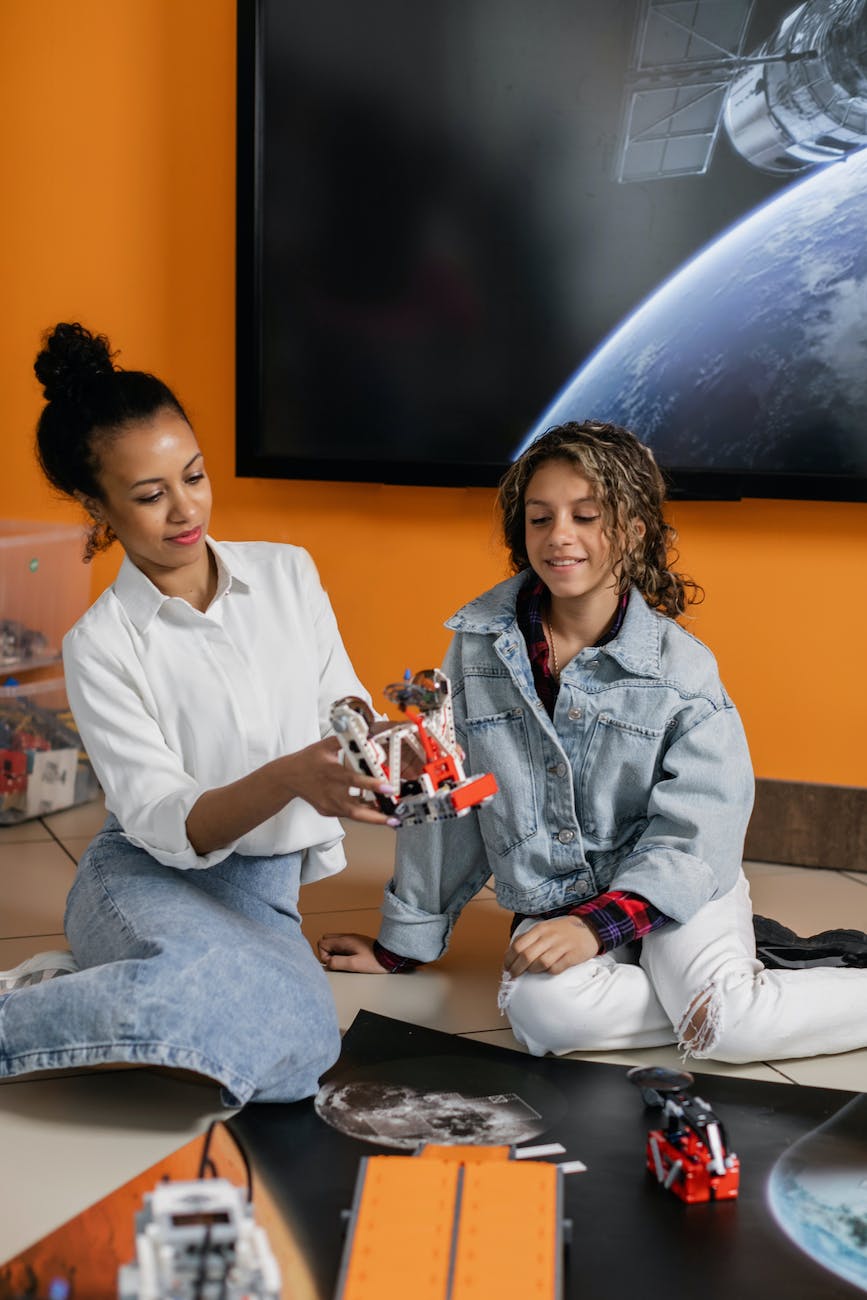
The benefits of collaboration for teachers include a chance for peer reflection, a community of practice, and partnerships that cross content and grade levels (Margot & Kettler, 2019). 3D models are effective to engage learners, but also other content teachers who stand to benefit from the addition of physical examples for classes that might not otherwise provide a full picture of concepts for students to acquire the knowledge required. Even in limited partnerships, collaborations across content and age groups benefits the whole school by creating a community of learners and practitioners focuses on the future.
Another important collaboration is teachers and students working with colleges, industry partners, and the community. These external stakeholders are important to give context to class-based explorations, provide a model for 21st-century skills in practice, and supply role models of the diversity of learners, genders, and cultural backgrounds in schools today. This is also important to sustainability of STEM programs. Having internal and external stakeholders, according to Dr. Jennifer Feighny, provides a stable balance to sustain positive change by maintaining mission-oriented change and moderating the effects of staff turnover (American College of Education, 2017). An emerging technology such as 3D printing can provide partnerships with higher institutions, large research and manufacturing companies, and smaller community businesses. As peers, mentors, and judges, these collaborations make powerful connections between 3D technologies and opportunities for learners.
Technology that supports collaboration is an important resource to consider. Keeping literature, demonstration videos, or project objectives in class management programs allows students to navigate to sources more readily and with a focus on content. For in-class sharing, Padlet, according to Kaczorowski, is a cloud based collaborative bulletin board that students can post their 3D model designs for feedback, share or comment on designs (2017). Learning management or classroom management systems combine online course management, collaboration, and communication tools (21st Century Learning Environment Models, n.d.). Being able to communicate and receive feedback or host real-time chats and events is a benefit for collaboration. Learners become the agents of their learning by accessing content and submitting work in a manner that reflects real-world practice. Socrative, Lumio, and ClassDojo are examples of management systems. If this is not available, a teacher can use a website builder like WordPress to create a site to host files, email, and display links, student work, and tutorials. Providing access to materials as they work caters to individual learning needs and diversity. Learners can create proposals and presentations to communicate with industry and college STEM students for social exchanges as a STEM professional would.
The sustainability of 3D printing in school is dependent upon collaboration at the student level and continues to grow through partnerships with industry and community stakeholders.
References:
21st Century Learning Environment Models. (n.d.). Eric. https://files.eric.ed.gov/fulltext/ED522778.pdf
American College of Education. (2017). SCI5233 Inventing and Reinventing: Module 4 [Part 5] Stakeholders and students: Changing relationships]. Canvas. https://ace.instructure.com/courses/1916361/external_tools/118428
Haruna, U. I. (2015). The need for an effective collaboration across science, Technology, Engineering & Mathematics (STEM) fields for a meaningful technological development in Nigeria. Journal of Education and Practice, 6(25), 16–21. https://files.eric.ed.gov/fulltext/EJ1078485.pdf
Kaczorowski, T. (2017, August). Educational technology for diverse learners. teachingld.org https://www.teachingld.org/wpcontent/uploads/2019/09/original_35.2.pdf.
Laal, M., & Ghodsi, S. M. (2012). Benefits of collaborative learning. Procedia – Social and Behavioral Sciences, 31, 486–490. https://doi.org/10.1016/j.sbspro.2011.12.091
Margot, K. C., & Kettler, T. (2019). Teachers’ perception of STEM integration and education: a systematic literature review. International Journal of STEM Education, 6(1). https://doi.org/10.1186/s40594-018-0151-2
Meier, M., & Thyssen, C. (2023). 3D Printing as an element of teaching—perceptions and perspectives of teachers at German schools. Frontiers in Education, 8. https://doi.org/10.3389/feduc.2023.1233337
 Marcus Szeiman